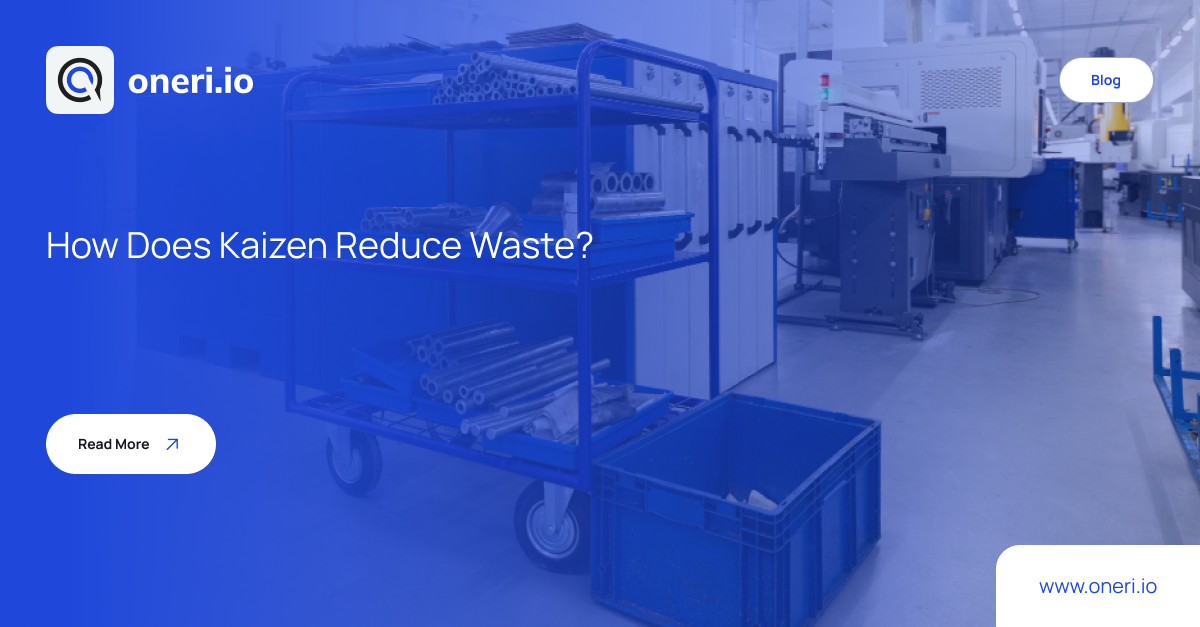
The Kaizen philosophy is a powerful tool for reducing waste. It’s based on the idea that when employees work together to improve their processes, they’re able to find solutions that increase efficiency and lower costs. This can also be applied to other areas of your business, including sales and marketing. So how does Kaizen reduce waste? The answers are in our blog post.
4 Ways to Reduce Waste with Kaizen
Kaizen is a powerful tool to reduce waste in your business. It can help you clean up processes and increase efficiency, but it also has the potential to save money by reducing waste.
1. Reducing defects
A defect is any error or problem that occurs in the production process. You might think of a defect as a waste, but itly even more than that. Defects can have serious consequences, from costly recalls to customer confidence and revenue lossnue. Kaizen helps companies identify and fix defects on the front end before they reach customers or become a burden to your team members.
Kaizen helps companies discover what they are doing wrong by asking their employees to look critically at their work processes and find ways to improve them. By encouraging employees to be honest about what they do right and wrong, Kaizen encourages them to look for ways to reduce defects in every step of their process—from design through delivery—so that customers receive products that meet their needs perfectly every time (and don’t break).
2. Reducing inventory
You may have heard the terms “inventory” and “waste” used interchangeably, but in reality they are not the same thing. Inventory is any material or resource that a company has in its possession, whether it be raw materials, spare parts or finished goods. Waste refers to all the different resources expended by an organization without generating value for either itself or its customers.
The main reason why inventory is considered waste is because of its cost: carrying costs such as storage fees and inventory obsolescence can quickly add up over time and eat into profits. In addition, to these financial hits, there are also costly effects on operations; for example, if you need some new supplies but your supply chain doesn’t work, ing efficiently enough due to poor planning or lack of communication with suppliers (which often happens when there’s too much inventory), then this could result in delays that inventory is considered waste is numbers!
3. Reducing non-essential movement
Another way to reduce waste is through reducing non-essential movement. Non-essential movement is not required to complete a task, such as walking across the room.
Some examples of non-essential movement include:
Walking back and forth between your desk and the printer or copier to pick up printed materials, even if they’re in a bin next to where you sit
Standing up when you get an email or text message on your phone from outside the building
4. Reducing overproduction
When you have an unlimited resource, it’s natural to want to use it as often as possible. This is especially true if the resource is costly or difficult to obtain. While this is good for short-term productivity, it leads to overproduction in the long run. For this reason, it is important not to produce as much as possible, but to produce enough to meet the demands of the customers.
To summarize;
Kaizen is a process improvement methodology that focuses on eliminating waste and improving quality. Kaizen emphasizes that people are necessary for successful change and creates an environment where people are empowered to continuously improve processes. The approach encourages deliberate small changes rather than large, wholesale overhauls.
Related Content: Ways to Promote Kaizen Culture